

Running a small business today means competing in a crowded marketplace where attention is scarce and customer expectations are high. That’s exactly why digital marketing for small businesses has become less of an option and more of a necessity. Whether you run a neighborhood bakery, a boutique consulting firm, or an online store, understanding how to use digital channels effectively can be the difference between steady growth and stagnation. In this guide, we’ll break down what digital marketing for small businesses actually looks like in practice, why it matters, and how you can build a strategy that fits your budget and goals.
Why Small Businesses Need Digital Marketing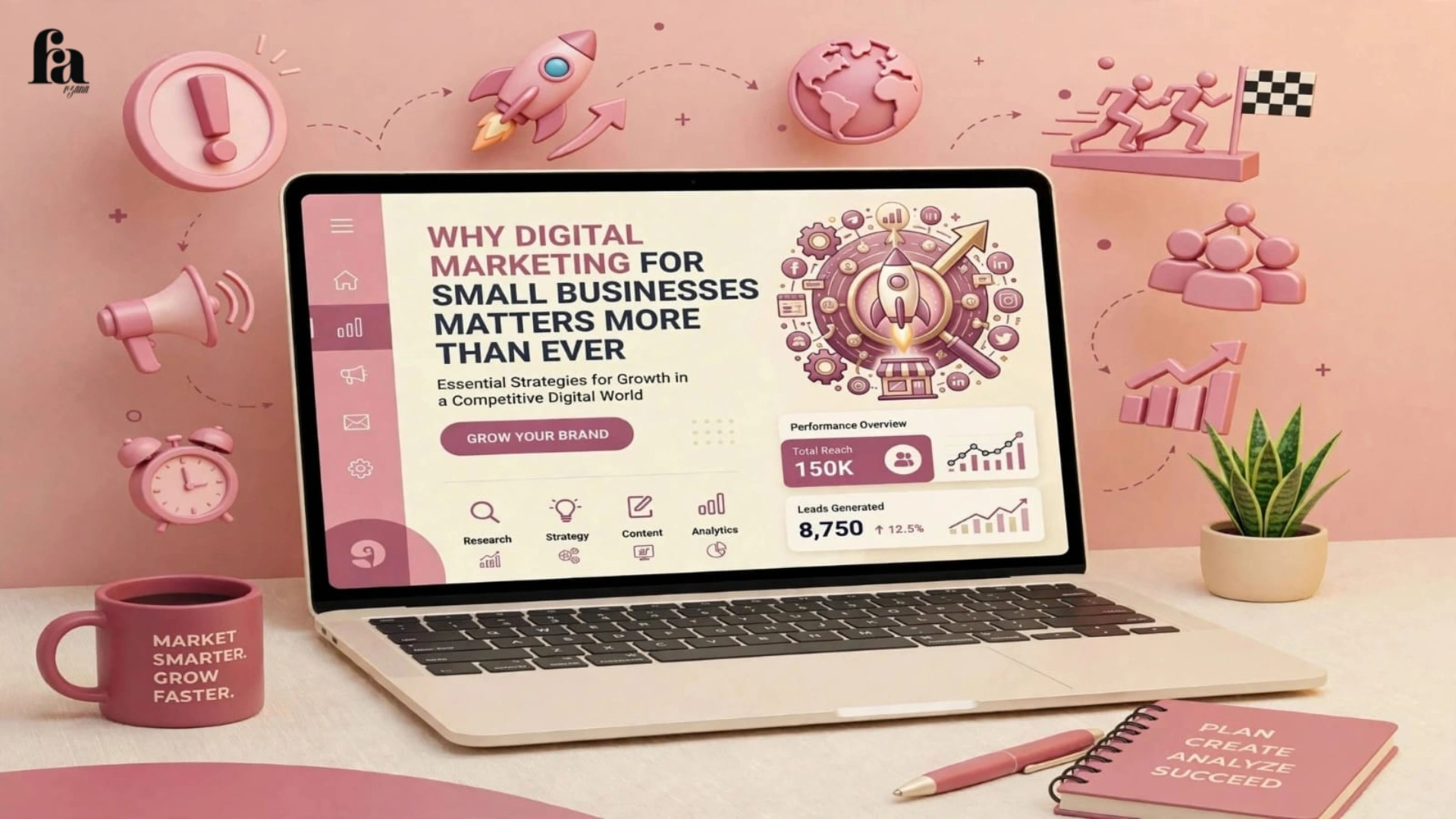
A decade ago, many small business owners could rely on foot traffic, word of mouth, and a listing in the local newspaper to bring in customers. Those days are largely gone. Consumers now search online before they buy almost anything, whether it’s a plumber, a pair of shoes, or a place to eat dinner. This shift is precisely why digital marketing for small businesses has moved from a “nice to have” to a core part of running a sustainable company.
Unlike traditional advertising, digital marketing for small businesses allows you to reach specific audiences, track results in real time, and adjust your approach based on actual data rather than guesswork. You don’t need a massive budget to compete; you need a clear strategy and consistency. That’s the real promise of digital marketing for small businesses: it levels the playing field between large corporations with enormous ad budgets and independent business owners who understand their customers deeply.
The Fundamentals of Digital Marketing for Small Enterprises
To build an effective approach to digital marketing for small businesses, it helps to understand the main channels available and how they work together.
1. Search Engine Optimization (SEO)
SEO is often the foundation of digital marketing for small businesses because it drives free, ongoing traffic from search engines like Google. When someone searches for a product or service you offer, you want your website to show up on the first page of results. This involves:
- Optimizing your website’s content with relevant keywords
- Improving site speed and mobile-friendliness
- Building quality backlinks from reputable sources
- Taking control of and improving your Google Business Profile for regional queries
Local SEO, in particular, is a critical piece of digital marketing for small businesses that serve a specific geographic area, such as restaurants, salons, or repair shops. Showing up in the “map pack” when someone searches “near me” can directly translate into foot traffic and phone calls.
2. Social Media Marketing
Social platforms like Instagram, Facebook, TikTok, and LinkedIn offer small businesses a direct line to their audience. A thoughtful social media strategy is a key component of digital marketing for small businesses because it builds brand personality, fosters community, and drives engagement without necessarily requiring a large ad spend. Posting consistently, responding to comments, and sharing behind-the-scenes content can humanize your brand in ways that traditional advertising never could.
3. Content Marketing
Blogging, videos, podcasts, and downloadable guides all fall under content marketing, another essential piece of digital marketing for small businesses. By creating helpful, relevant content, you position your business as an authority in your niche while also improving your SEO. Content marketing takes time to show results, but it compounds — an article you write today can continue attracting visitors for years.
4. Email Marketing
For small businesses, email continues to be one of the most profitable digital marketing mediums. Building an email list allows you to nurture relationships with existing customers, promote new products, and re-engage people who haven’t purchased in a while. Email marketing provides you with direct access to your audience’s mailbox, in contrast to social media, where algorithms determine who sees your content.
5. Pay-Per-Click (PPC) Advertising
For businesses wanting faster results, paid advertising through platforms like Google Ads or Meta Ads can be a powerful part of digital marketing for small businesses. PPC allows precise targeting based on location, interests, demographics, and search behavior, meaning you only pay when someone actually clicks on your ad. While it requires a budget, even a modest daily spend can generate meaningful leads when campaigns are set up correctly.
Building a Digital Marketing Strategy on a Small Business Budget
One of the biggest misconceptions is that digital marketing for small businesses requires a huge investment. In reality, many of the most effective tactics cost little more than time and consistency. Here’s how to approach it strategically:
Start with clear goals. Before spending a dollar, define what success looks like. Are you trying to generate leads, increase online sales, build brand awareness, or drive foot traffic? Your goals will shape which channels deserve the most attention.
Know your audience. Effective digital marketing for small businesses starts with a deep understanding of who your customers are, what problems they face, and where they spend time online. A local hardware store and a boutique skincare brand will need very different approaches.
Prioritize one or two channels first. Trying to do everything at once — SEO, social media, email, and paid ads simultaneously — often leads to mediocre results across the board. Instead, choose the one or two channels most likely to reach your audience and do them well before expanding.
Track your results. Tools like Google Analytics, social media insights, and email marketing platforms provide data on what’s working. This measurement is at the heart of digital marketing for small businesses because it lets you invest more in what performs and cut what doesn’t.
Be consistent. For small businesses, digital marketing is rarely a one-time event. Posting once and hoping for viral success, or publishing a single blog post and expecting a flood of traffic, sets unrealistic expectations. Growth tends to come from steady, repeated effort over months, not days.
Common Mistakes Small Businesses Make with Digital Marketing
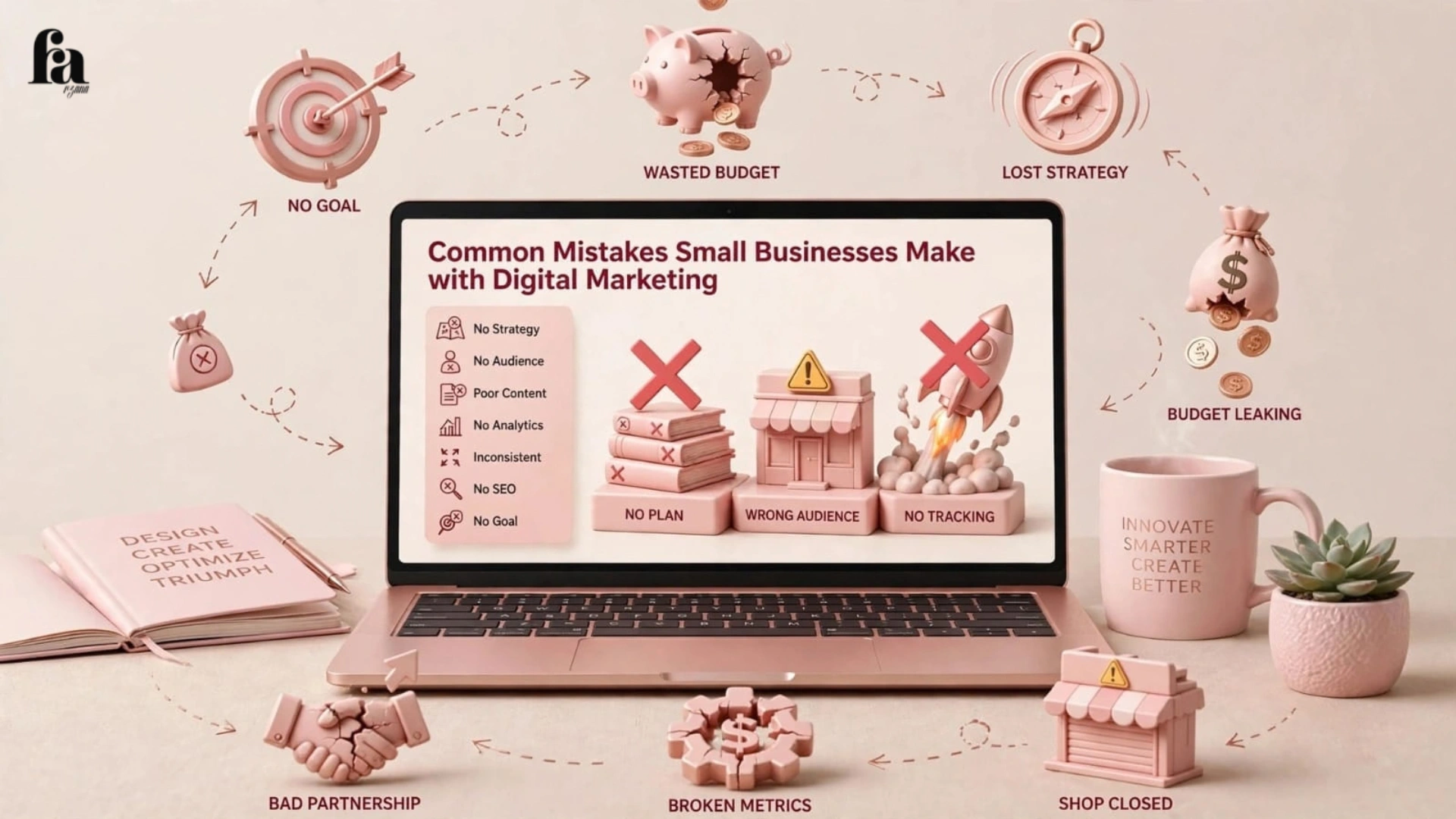
Even well-intentioned business owners run into pitfalls when approaching digital marketing for small businesses. Some of the most common include:
- Trying to be everywhere at once. Spreading yourself across every platform without a clear strategy dilutes your efforts and your message.
- Ignoring mobile users. Nowadays, a large percentage of web traffic comes from smartphones. If your website isn’t mobile-friendly, you’re losing potential customers before they even see what you offer.
- Neglecting customer reviews. Online reviews heavily influence purchasing decisions. Encouraging satisfied customers to leave reviews should be a standard part of any digital marketing for small businesses plan.
- Focusing only on selling. Constantly pushing promotions without providing value or building relationships tends to alienate audiences rather than convert them.
- Not tracking performance. Without analytics, it’s impossible to know whether your efforts are paying off or which adjustments are needed.
How to Get Started with Digital Marketing for Small Businesses Today

If you’re new to this space, it can feel overwhelming to know where to begin. Here’s a simple roadmap:
- Audit your current online presence.Look for your company online and see what results. Is your website outdated? Are your social profiles inactive?
- Set up or optimize your Google Business Profile. This is one of the fastest, most cost-effective steps in digital marketing for small businesses, especially for local companies.
- Choose one platform to focus on. Whether it’s Instagram, a blog, or email newsletters, pick a channel that matches where your customers already spend time.
- Create a simple content calendar. Plan out posts or emails a few weeks in advance so you stay consistent without feeling overwhelmed.
- Review your results monthly. Look at what’s working and adjust your approach as you learn more about your audience.
The Long-Term Value of Digital Marketing for Small Businesses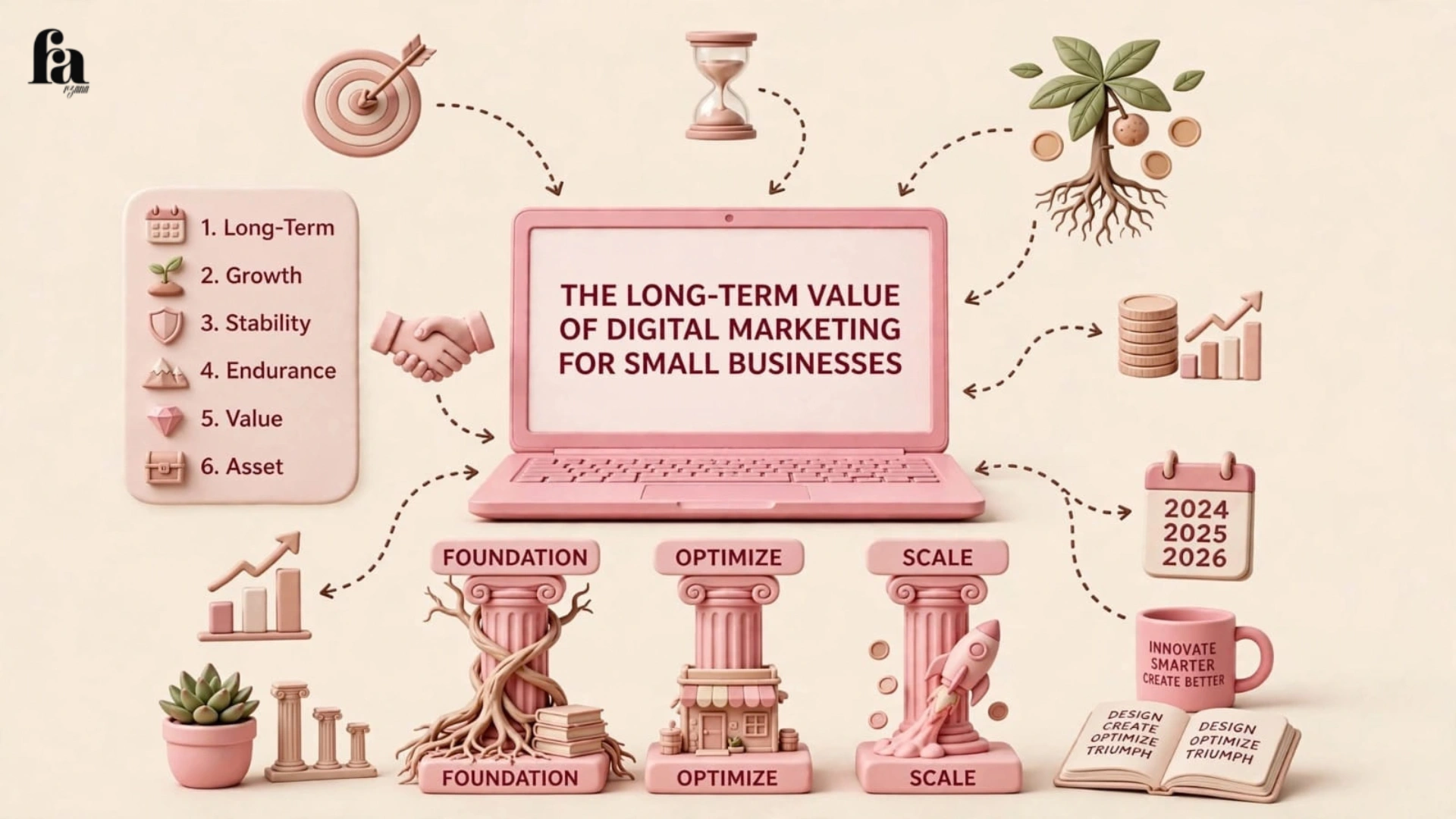
Perhaps the most important thing to understand is that digital marketing for small businesses is an investment in long-term visibility, not a quick fix. Unlike a print ad that disappears once the newspaper is recycled, a well-optimized website, a library of helpful blog content, and an engaged social media following continue to generate value long after the initial effort. Small businesses that commit to consistent, thoughtful digital marketing often find that their online presence becomes one of their most valuable assets — generating leads and sales around the clock, even while the owner sleeps.
As competition continues to move online, the businesses that invest early in digital marketing for small businesses position themselves to capture customers before their competitors do. It doesn’t require a massive team or an unlimited budget — it requires a clear strategy, a willingness to learn what works for your specific audience, and the patience to stay consistent over time.
Frequently Asked Questions
How much should a small business spend on digital marketing? There’s no universal number, but many small businesses start with a modest monthly budget covering website hosting, a scheduling tool for social media, and a small paid ad test. As you see which channels bring in customers, you can reallocate spend toward what performs best. The key is to start small, measure results, and scale gradually rather than committing a large budget before you know what works for your audience.
How long does it take to get results?SEO and content marketing typically take three to six months to show meaningful traction, since search engines need time to index and rank new content. Paid advertising and social media can generate quicker feedback, sometimes within days or weeks, though sustained results still depend on consistent effort and ongoing optimization.
Can I handle digital marketing myself, or do I need to hire help? Many small business owners start by managing their own marketing, especially on platforms like Instagram or through email newsletters, which have relatively low learning curves. As the business grows, it often makes sense to bring in freelancers or agencies for specialized tasks like SEO audits, ad campaign management, or professional content creation, freeing up the owner’s time to focus on running the business
Which channel gives the best return on investment? It depends heavily on your industry and audience. Local service businesses often see strong returns from local SEO and Google Business Profile optimization, while e-commerce brands may find paid social ads or email marketing more lucrative. Testing a couple of channels with clear tracking in place is the most reliable way to discover what delivers the best return for your specific business.
Final Thoughts
Digital marketing for small businesses isn’t about chasing every new trend or platform. It’s about understanding your customers, showing up where they are, and providing consistent value over time. By focusing on the fundamentals — SEO, social media, content, email, and paid advertising — and by tracking what actually works, small business owners can build a marketing engine that grows their brand without breaking the bank. Start small, stay consistent, and let your digital marketing efforts compound into lasting business growth.